
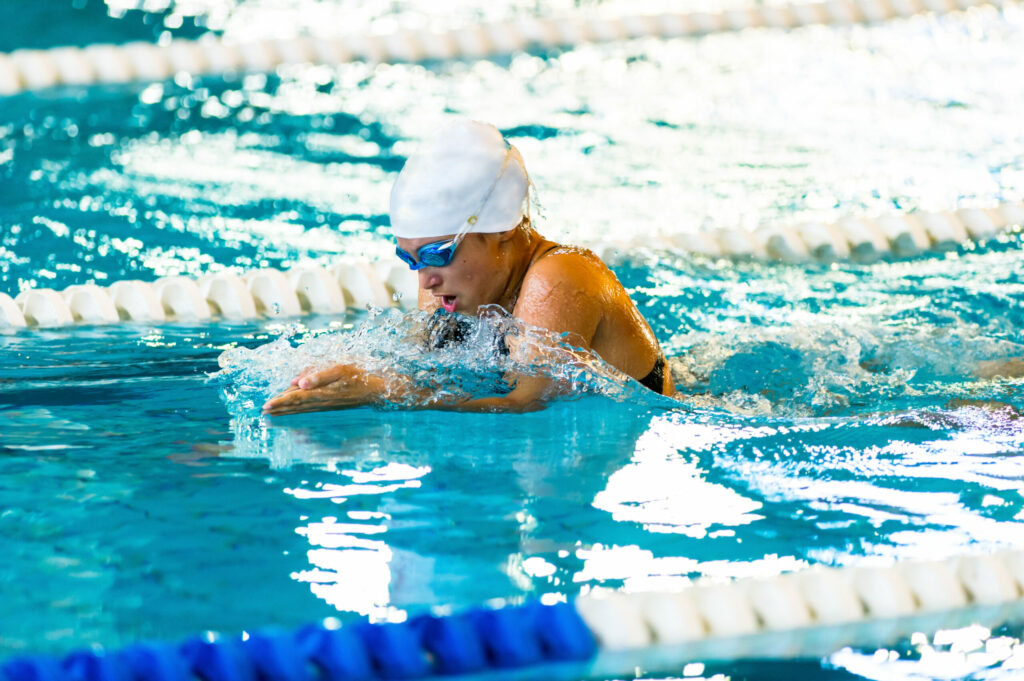
Is Breaststroke Bad for Your Knees?
This question often arises among swimmers dealing with discomfort. While breaststroke is a popular and efficient swimming stroke, it can sometimes lead to issues like breaststroke knee pain if not performed correctly. The short answer is no, it’s not inherently bad for your knees, but improper technique, lack of strength, or overuse can contribute to problems. Understanding how to swim efficiently while protecting your knees is key to maintaining joint health.
Understanding Breaststroke Knee Pain
Breaststroke knee is a common issue among swimmers, caused by repetitive stress on the medial compartment of the knee. This area, located on the inside of the knee closest to the other leg, can become strained due to the unique mechanics of the breaststroke kick. This issue is particularly common in swimmers who practice breaststroke frequently without balancing their routine with other strokes or adequate dry-land training.
The Mechanics of Breaststroke
The breaststroke is a powerful stroke that relies heavily on the legs for propulsion. The kick involves switching the legs from extension to flexion at the knee and back to extension, accompanied by an external rotation of the lower leg. The repetitive snapping motion required to bring the legs back together can place significant stress on the knees, particularly if the technique is not executed properly. Over time, this can lead to discomfort and even injury.
Prevention and Management of Knee Pain
Strengthening the Muscles Around the Knee
Preventing breaststroke knee pain starts with strengthening the muscles that support the knee. Exercises such as squats, forward and backward lunges, and sit-to-stand movements target the quadriceps, hamstrings, and glutes, which play a vital role in stabilizing the knee. Regular strength training not only supports joint health but also improves overall swimming performance by enhancing leg power and control.
Improving Range of Motion
Flexibility is another critical component in preventing knee pain. Exercises like gate openers can enhance the range of motion in the hips and knees, reducing the risk of strain. To perform a gate opener, stand on one leg, raise the opposite knee to hip level, and rotate it outward and away from the body. Incorporating dynamic stretches into your routine can also help improve mobility and prevent stiffness.
Perfecting Your Technique
The mechanics of the breaststroke kick play a significant role in knee health. As you start the kick, bring your heels to your bottom with the knees aligned under your hips. Turn your feet outward and move them in a circular motion until they meet at full extension. Proper technique reduces unnecessary stress on the knee joint and prevents the development of bad habits. Remember, repetition builds muscle memory, so practice consistently to refine your form. Knowing how to do breaststroke properly is essential for preventing knee issues.
Is Swimming Good for Knee Pain?
Swimming is widely regarded as one of the best low-impact exercises for individuals with joint problems. The buoyancy of water reduces stress on the joints, making it ideal for those recovering from injuries or managing chronic conditions. However, the suitability of different strokes depends on individual needs. While breaststroke is effective for building strength and endurance, its mechanics can aggravate knee problems if performed incorrectly. Freestyle and backstroke are often considered the best swimming strokes for knee problems, as they place less repetitive stress on the knee joint.
Addressing the Disadvantages of Breaststroke
The Impact of Repetitive Movements
The disadvantages of breaststroke primarily stem from its reliance on repetitive leg movements. If performed without proper technique or adequate muscle strength, these movements can strain the medial knee structures, leading to pain and discomfort. Over time, this repetitive stress can cause inflammation, reduced mobility, and even long-term damage if left unaddressed.
Modifications to Reduce Stress
To minimize the impact on your knees, consider using tools like kickboards to isolate specific aspects of the stroke. Incorporating fins during training can also help reduce resistance and prevent overexertion. These modifications allow you to maintain your routine while protecting your knees from unnecessary strain.
Dry Land Training for Better Knee Support
Strengthening Exercises
Dry-land training is a critical component of a swimmer’s routine, especially for those experiencing knee pain. Strengthening exercises targeting the quadriceps, hamstrings, glutes, and calves improve the stability and resilience of the knee joint. Plyometric exercises, resistance band workouts, and balance drills can further enhance lower-body strength and joint stability.
Flexibility and Mobility
In addition to strength training, focusing on flexibility and mobility is essential. Incorporating yoga, dynamic stretches, and foam rolling can prevent stiffness and enhance the range of motion in the knees. Foam rolling, in particular, helps release tight muscles and fascia, reducing tension around the knee joint.
Listening to Your Body
Pain is your body’s way of signaling that something is wrong. If you’ve experienced symptoms like breaststroke bad for knees or knieschmerzen nach brustschwimmen (knee pain after breaststroke), it’s essential to address them early. Continuing to swim through pain can worsen the issue, leading to chronic problems that may require prolonged rehabilitation. Consult a coach or physical therapist to identify the root cause and create a plan for recovery.
How Total Performance Physical Therapy Can Help
If you’re dealing with breaststroke knee pain, Total Performance Physical Therapy offers specialized treatment for sports-related injuries. Our experienced therapists provide comprehensive evaluations and personalized treatment plans designed to address your unique needs.
We focus on strengthening the muscles around the knee, improving flexibility, and refining your swimming mechanics to prevent future injuries. Whether you’re a competitive swimmer or someone who enjoys swimming recreationally, our goal is to help you achieve optimal performance while staying pain-free.
With five convenient locations in Hatfield, East Norriton, Harleysville, Horsham, and North Wales, we proudly serve Bucks County and Montgomery County, PA.
Conclusion
Is breaststroke bad for your knees? The answer depends on how you approach it. With proper technique, consistent strength training, and a focus on flexibility, breaststroke can be performed without causing knee pain. However, ignoring pain or using improper mechanics can lead to issues over time.
If you’re experiencing knee pain related to breaststroke or any swimming stroke, Total Performance Physical Therapy is here to help. Contact us today for a consultation and take the first step toward pain-free swimming and optimal performance.
