
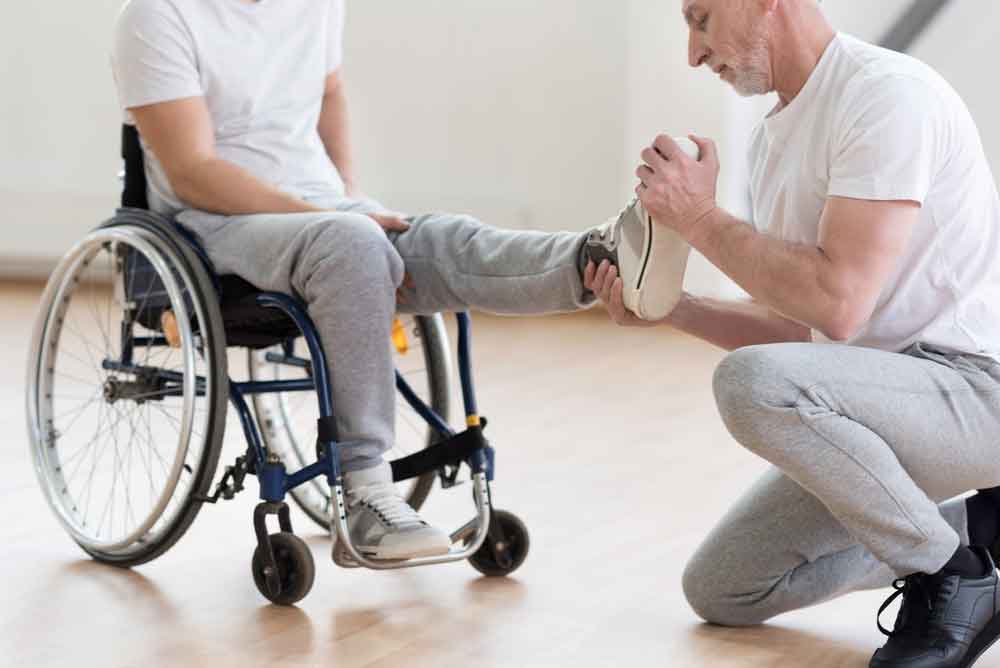
Life can change in an instant. You might wake up unable to move one side of your body. An accident could leave your legs unresponsive. Paralysis arrives suddenly and without warning. Loss of movement is what you notice first. The emotional impact takes longer to understand.
Needing someone to help you get dressed. Relying on others for basic bathroom needs. Your independence disappears, and that psychological blow often hurts more than the physical damage.
But people do get better. Physical therapy for paralysis has genuinely helped patients recover abilities they thought were gone forever.
A powerful real-world example is Christopher Reeve, who was best known for playing Superman in the late 1970s and early 1980s. After a horseback riding accident left him paralyzed, he committed to intensive rehabilitation. Through consistent physical therapy, he was able to regain some level of movement and function. His journey showed that even in severe cases, physical therapy can play a critical role in recovery and restoring independence.
What Causes Paralysis?
Your brain communicates with muscles through nerve pathways. Break those pathways anywhere, and movement stops.
Strokes kill brain cells that control muscle movement. Spinal cord injuries cut the nerve connections between your brain and limbs. Traumatic accidents can harm the nervous system extensively. Multiple sclerosis causes your immune system to destroy nerve insulation.
Where the damage happened and how bad it is affects your chances of recovery. Quick action matters tremendously. Getting into neurological physical therapy in Harleysville early can significantly impact your ability to walk again compared to waiting half a year.
How Physical Therapy Supports Recovery
Physical therapy for paralysis recovery in Hatfield targets silent nerve pathways. Your muscles still work. The problem is the broken communication line between the brain and muscle. Therapy rebuilds those connections through repetitive, focused work.
Complete recovery doesn’t happen for everyone. Sometimes achieving independence means being able to button your shirt without help. Or standing while you make breakfast. Or holding a pen steadily enough to sign your name. Your goals won’t match the next patient’s goals.
Progress bounces around. One day you’ll lift your leg higher than ever. The next day you’ll barely manage half that distance. Therapists expect these swings and plan around them.
Evidence-Based Physical Therapy Techniques
- Task-Oriented Training: Sessions focus on real activities from your daily routine. Need to cook again? You’ll work on reaching shelves, gripping pots, coordinating knife work. Everything practiced has direct application to your life.
- Gait and Balance Training: Relearning safe walking requires months of consistent work. You’ll hold support rails while wearing safety equipment. Each week adds small improvements to how you distribute weight and control steps.
- Neuroplasticity Exercises: Your brain builds new pathways around injured areas when stimulated correctly. Rehabilitation exercises for paralysis repeatedly activate weak muscles until your brain establishes alternative control routes. Research consistently supports these methods.
- Aquatic Therapy: Pool therapy works differently than land exercises. Water holds your weight up, so you can practice movements without the sharp pain. You’re still building muscle and getting stronger, just without gravity crushing down on damaged nerves.
Emotional and Mental Benefits of Physical Therapy
Paralysis brings a specific type of depression that’s hard to explain to others. It’s not just feeling low. It’s questioning whether life has any point when you can’t control your own body.
Anxiety becomes relentless. You worry constantly about being a burden. You fear never improving. You panic about losing even more function.
Therapy helps your mental state as much as your physical condition. When you accomplish something today that was impossible last week, your perspective shifts. Over weeks and months, your mindset shifts. Yes, progress moves slowly. But each small win matters more than you’d think. Your therapist has worked with dozens of paralysis patients before you. They understand what’s achievable for your particular injury and help you set goals that make sense.
The Importance of Personalized Treatment
Every paralysis rehabilitation in Horsham case is unique. Where you were injured, how badly, your age, what you do for work, who’s helping you at home are all these factors that shape your treatment plan.
A teacher needs different functional goals than a warehouse worker. Someone living alone needs different skills than someone with family support. Treatment adapts to your specific situation.
Plans change weekly based on your progress. Family members who understand rehabilitation exercises for paralysis and help at home dramatically accelerate improvement compared to working alone.
Life After Rehabilitation
Finishing formal therapy sessions doesn’t mean you’re done working.
Skip your exercises and you’ll lose what you worked for. Nutrition plays a bigger role than people realize since nerves need specific nutrients to repair themselves. Sleep isn’t optional either because your brain consolidates new motor skills during rest.
Keep moving in whatever capacity you can manage. Staying sedentary causes serious secondary complications like pressure sores, blood clots, and respiratory infections.
Some weeks you’ll work hard and see no improvement at all. You’ll have setbacks where abilities temporarily decline. What you’ve built won’t vanish during these phases.
The Bottom Line
Physical therapy for paralysis won’t erase your injury. It won’t return you to exactly who you were before. It can restore enough function to live meaningfully again.
Some patients recover far more than medical predictions suggested. Others adapt to permanent changes while still finding satisfaction and purpose in life.
Both demonstrate that paralysis doesn’t control your entire story.
Whether you’re experiencing paralysis yourself or caring for someone who is, Total Performance Physical Therapy specializes in these challenging cases. Their services include paralysis rehabilitation in Horsham, neurological physical therapy in Harleysville, and physical therapy for paralysis recovery in Hatfield, as well as East Norriton and North Wales.
FAQs
- What is the main goal of physical therapy after paralysis?
Recovering whatever function is realistically possible and achieving maximum independence. Walking without assistance for some. Self-feeding or wheelchair control for others. Goals depend entirely on your injury and what matters most to your daily life.
- How long does it take to see progress in paralysis recovery?
No standard timeline exists. Small changes might show within weeks. Significant functional improvements typically take six months to two years. Most patients see their biggest gains during the first twelve months. Recovery doesn’t stop there though. Keep putting in the work, and improvements can continue for years.
- Can physical therapy help if the paralysis happened years ago?
Yes. Chronic paralysis still responds to appropriate therapy. Your nervous system maintains some adaptability throughout life, though it decreases with age. Immediate treatment after injury produces better results, but delayed treatment still provides real benefits.
- What are the latest technologies used in paralysis rehabilitation?
Robotic devices that guide your legs through walking motions. Electrical stimulation units that activate paralyzed muscles artificially. Virtual reality programs that make exercises engaging. Treadmills with weight support systems that let you practice walking before you can support yourself fully.
- Is aquatic therapy effective for patients with paralysis?
Very effective for many patients. Water eliminates gravitational stress while providing resistance for muscle building. People who can’t stand on land often manage walking in chest-deep water. Warm pools also reduce muscle spasms and pain levels.