
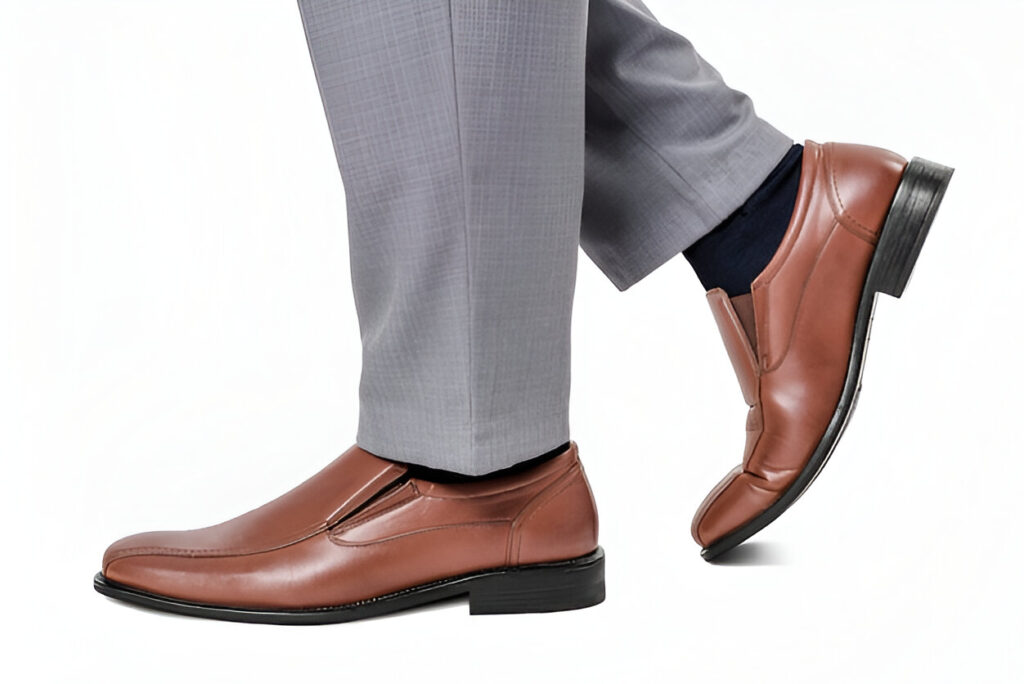
Are Clarks dress shoes bad for you? It’s a question we hear often from patients struggling with foot, knee, hip, or even back pain—especially those who spend long hours standing or walking in formal footwear. While men’s dress shoes like Clarks and Aldo may look polished and professional, many are built with features that can negatively impact your alignment, posture, and comfort. These issues often go unnoticed until pain becomes a part of your daily life.
Many dress shoes on the market lack proper arch support, which is essential for maintaining healthy foot structure and minimizing stress on your joints. When arch support is absent, your feet may overpronate (roll inward), which affects the alignment of your ankles, knees, hips, and spine. Over time, this misalignment can lead to chronic discomfort, especially in your lower back and knees.
Cushioning is another major factor. Good cushioning absorbs the shock your body takes with each step. Without it, your joints absorb more impact than they should—leading to fatigue and strain, particularly for those who are on their feet for hours at work or social events. Unfortunately, many dress shoes, especially rigid leather styles, fall short in this department.
Another commonly overlooked issue is toe box width. A narrow or pointed toe box squeezes your toes together, restricting natural foot movement. This can lead to problems like bunions, neuromas, and general foot pain. Clarks and similar brands are often constructed with stiffer materials and a tight toe box, which not only limits motion but may change the way your foot strikes the ground. That subtle change can have ripple effects up your legs, altering your gait and increasing stress in other areas.
Shoe rigidity also plays a role. While a shoe needs to be supportive, it shouldn’t be so stiff that it limits natural foot and ankle motion. A rigid shoe can force your foot into unnatural positions, reducing the effectiveness of your stride and increasing strain across your lower body. When your footwear restricts natural movement, your body compensates elsewhere—often resulting in pain or fatigue.
So, what should you look for in a good dress shoe? Start with arch support—whether built-in or added via orthotics. Cushioning is next: look for a midsole that absorbs shock without being too soft. A wide toe box is crucial to allow your toes to spread naturally, and the sole should be flexible but firm, bending at the ball of the foot but supportive through the arch.
If you’re shopping for a new pair, it’s a good idea to wear them around the house first. This “break-in” period allows you to test comfort and fit in a low-risk setting. If your feet feel cramped, unsupported, or tired after a short time, it may not be the right shoe for you—no matter how good it looks.
While brands like Clarks and Aldo are stylish, they often miss the mark in key support areas. On the other hand, premium brands like Mephisto are known for building shoes that prioritize both structure and comfort. Though more expensive, they typically offer superior arch support, cushioning, and construction quality—and they last longer, too.
Ultimately, investing in your health should take priority over short-term style. If you’re unsure which shoes are right for you, consulting with a physical therapist is a great first step. At Total Performance Physical Therapy, we assess not just your symptoms, but the root causes—like poor footwear—contributing to your discomfort. We can also guide you in choosing shoe brands and styles that match your body’s needs.
Contact Total Performance Physical Therapy today to speak with a licensed physical therapist about proper shoe fitting and customized pain relief strategies that work for your lifestyle.

Pingback: The first few steps hurt in the morning - Total Performance