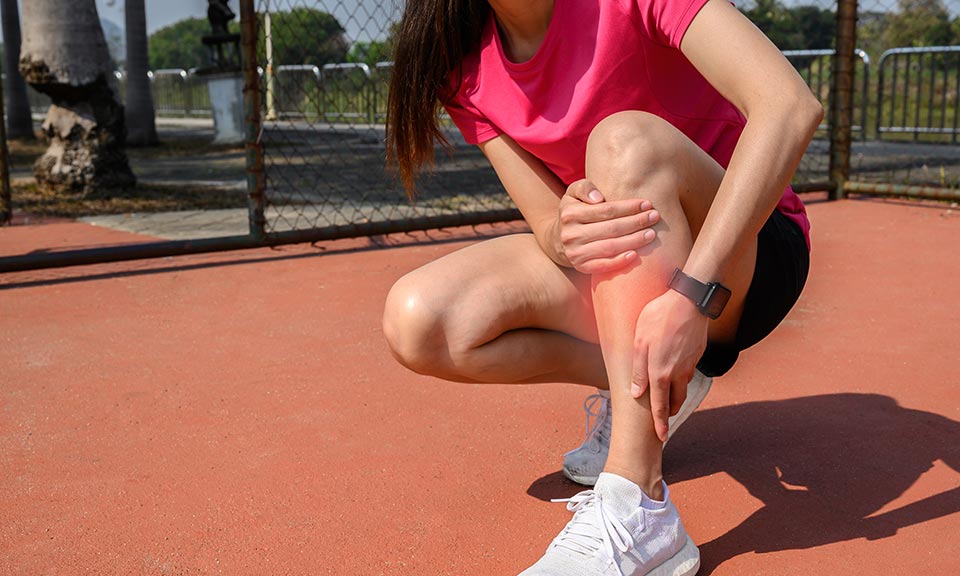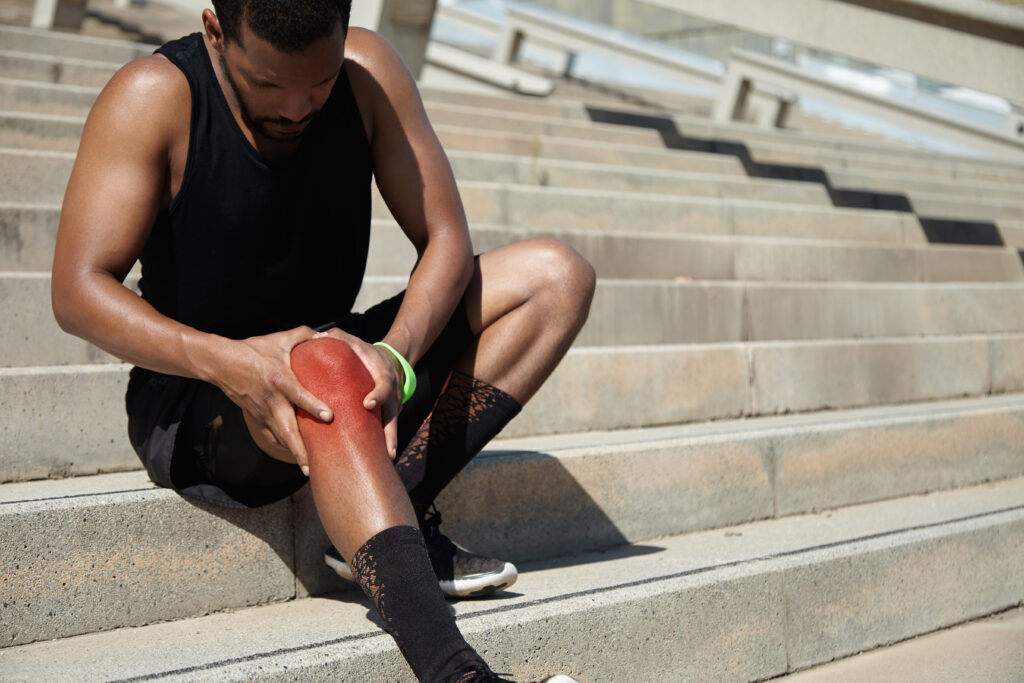
You’ve been dealing with knee pain for months. Rest helps for a bit. Then you start running again and it comes back. Most runners chase the pain. Ice it. Rest. But the real problem isn’t the pain. It’s why you’re getting it. Usually weak hips, poor foot strike, or glutes that aren’t firing.
That’s the difference between treating symptoms and fixing biomechanics. One keeps you stuck. The other gets you running pain-free.
What Causes Running Pain?
Running is repetitive. Thousands of strides per mile. If something’s off, even slightly, that problem gets magnified with every single step.
Weak glutes. Tight hips. Poor ankle mobility. Imbalances between legs. A foot rolling inward too much. These small problems force your body to compensate. Your knee takes extra load. Pain shows up.
Overtraining without strength work makes it worse. You’re running 40 miles a week but never doing glute exercises. Your core is weak. Your body breaks down.
Sometimes it’s shoes. Sometimes it’s how you’re landing. The point is, pain is just the signal that something mechanical is broken.
Biomechanics 101
When you run right, it’s efficient. Your foot lands under your body. Your knee tracks over your ankle. Your hips stay level. Your core is engaged.
Your cadence matters. Most efficient runners land around 170 to 180 steps per minute. Too slow and you’re overstriding.
Your foot strike pattern affects everything. Heavy heel striking with poor hip stability means your knee absorbs impact it shouldn’t. If your foot pronates excessively, your knee valgus kicks in. These small mechanical faults cascade into injury.
How We Identify the Root Cause
Gait analysis for running injuries changes everything. We watch you run. We analyze your foot strike, knee alignment, hip stability, cadence, and posture.
Then we test your strength. Can your glutes fire properly? How strong is your hip abduction? What about your core? We look for imbalances. One leg stronger than the other. Ankles with limited mobility.
We watch for compensation. Your knee pain might actually be your hips not doing their job. That’s why treating just the knee never works.
Looking for running injury treatment near me? That’s where we come in. Total Performance Physical Therapy does exactly this. We watch how you move. We analyze your gait. We find what’s actually broken, not just treat where it hurts.
PT Techniques That Fix Biomechanics
Manual therapy loosens tight muscles and mobilizes restricted joints.
Then comes strengthening. Glute bridges. Clamshells. Single-leg work. Hip exercises. Core drills. We build the muscle groups that keep you running efficiently.
Mobility and flexibility training gets your body moving through the ranges it needs. Tight hip flexors limit your stride. Limited ankle mobility changes how your foot lands.
Running form retraining happens on the treadmill. We watch you run. We cue you. You focus on landing under your body. We work on cadence. You practice pain-free running techniques until it becomes automatic. This is what real form correction looks like.
How This Prevents Re-Injury
When muscles are balanced, load distributes evenly. Your knee doesn’t get punished. Your hip stays stable. Impact forces travel the way they’re supposed to.
Efficient movement patterns use less energy. You’re not fighting yourself. You’re not compensating.
Gait analysis for running injuries prevents the next problem. You’re building a stronger, more resilient runner.
Realistic Timelines
Caught early? Expect improvement in 4 to 6 weeks. You’ll notice better form. Pain decreases.
Chronic issues take 8 to 12 weeks of consistent work. You’ll see progress. Strength improves. Running gets smoother.
The timeline depends on how long the problem’s been there and how consistently you do your work at home.
At-Home Strategies
Strength exercises 3 to 4 times a week. Mobility routines before and after running. Cadence drills to reprogram your stride.
Warm up properly. Activate your glutes. Get your hips moving. Cool down and stretch.
Once you’re pain-free, keep doing this stuff. Your body forgets quickly. Skip your strength work for a few weeks and imbalances creep back in.
Common Questions
- Why does my running pain keep coming back?
Because the biomechanical problem never got fixed. You treated the symptom, not the cause. - Can biomechanics alone cause knee pain?
Pretty much always. Bad mechanics create way too much load on your knee. That’s how pain starts. - How soon will I see changes in my form?
A few weeks of consistent practice. Real change takes longer, but you’ll feel it sooner. - Do all runners need gait analysis?
If you have pain, absolutely. If you’re running well, maybe not. But many runners benefit from optimization. - Can PT improve speed and performance?
Absolutely. Better biomechanics means more efficient running. That translates to speed gains and better endurance.
Conclusion
Pain-free running techniques aren’t magic. They’re just mechanics done right. Running biomechanics correction means identifying what’s broken and fixing it systematically.
Don’t keep treating symptoms. Find running injury treatment near me. At Total Performance Physical Therapy, we watch how you run. We figure out what’s causing the pain. We built a plan to fix it. Strengthen the weak spots. Fix your form. Get you running again without pain.
Work with someone who understands running mechanics. Get your form right. Build your strength. And you’ll stay healthy, fast, and actually enjoy running again.